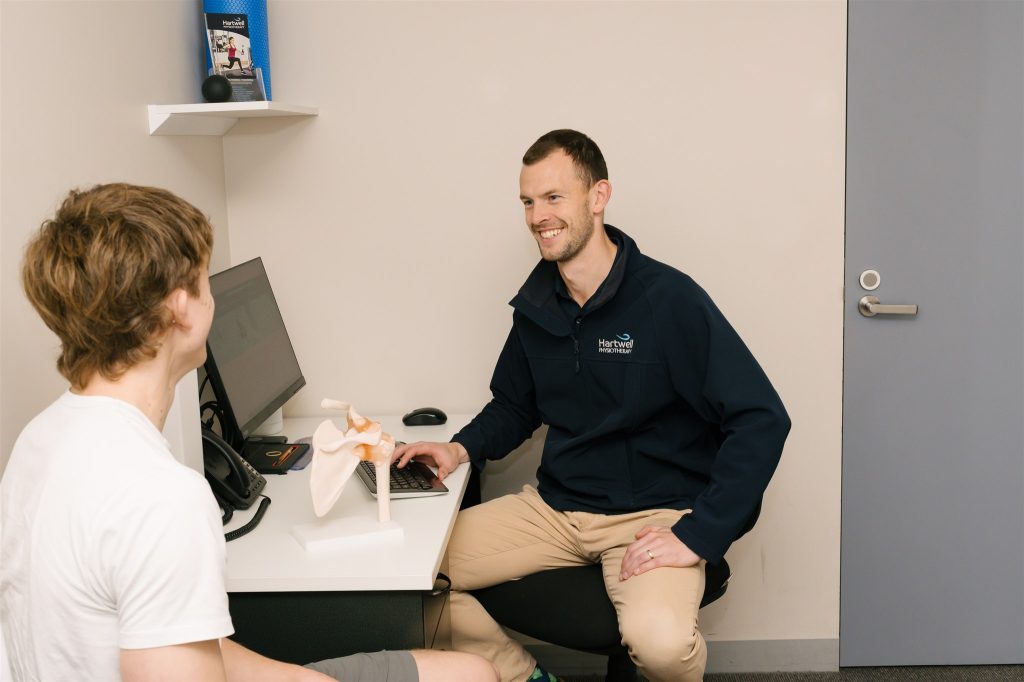
The shoulder is the most mobile joint in the body. It’s a ball-and-socket joint, where the top of the upper arm bone (humerus) fits into a shallow socket on the shoulder blade (glenoid). Because of this unique mobility, the shoulder can be more vulnerable to instability.
A dislocation occurs when the ball completely slips out of the socket. In some cases, the shoulder may sublux, meaning it partially slips out and back into its original position.
The most common type is an anterior dislocation, where the ball moves forward out of the socket. This often happens during contact sports, falls, or awkward movements with the arm overhead or behind the body.
- Sudden, intense pain in the shoulder
- Visible deformity (the shoulder may look “out of place”)
- Inability to move the arm normally
- Swelling, bruising or muscle spasm
- Numbness or tingling down the arm
If you suspect a shoulder dislocation, seek medical attention immediately, do not try to “pop it back in” yourself.
The first step is to relocate the shoulder joint safely, typically in an emergency department or by a trained health professional. This helps relieve pain and restore movement.
After relocation, imaging such as an X-ray may be done to check for fractures or other injuries.
You may be advised to use a sling for a short period to allow tissues to settle.
Rehabilitation plays a critical role after a shoulder dislocation. Once pain and swelling have settled, physiotherapy focuses on:
- Restoring movement: gentle exercises to regain flexibility and mobility
- Strengthening stabilising muscles: particularly the rotator cuff and shoulder blade muscles
- Improving control and coordination: to reduce the risk of further instability
- Guiding a safe return to activity and sport
Early and structured rehab is important. Without proper strengthening, the risk of re-dislocation can be higher especially in young, active people.
Even with excellent rehab, some people continue to experience recurrent dislocations. This is more common in younger people and those who play contact or overhead sports, as the shoulder capsule and surrounding tissues can become stretched or damaged over time.
In these cases, surgical stabilisation may be recommended to help prevent further episodes and improve shoulder stability long term. Physiotherapy still plays a key role before and after surgery to optimise recovery.
It’s a good idea to book a physio appointment soon after your shoulder is relocated (once cleared medically). We can:
- Assess your shoulder’s stability and movement
- Create an individualised rehab plan
- Monitor your progress and adapt exercises over time
- Guide your safe return to work, gym or sport
- Liaise with your GP or orthopaedic specialist if surgery may be needed
A shoulder dislocation is serious, but recovery is very achievable with early care, proper rehab, and strengthening. Even if surgery becomes necessary after recurrent episodes, physio is an essential part of getting you back to full strength.
If you’ve recently dislocated your shoulder or are dealing with repeated instability, our physiotherapists can guide your recovery every step of the way. Book an appointment today.
Our Physio Cam shares his own shoulder dislocation journey.