
Hamstring strains (tears) are extremely common injuries. They generally occur when the hamstring muscle is under tension as it is lengthening (eccentric contraction), which is why they are often seen in sports that involve sprinting and kicking.
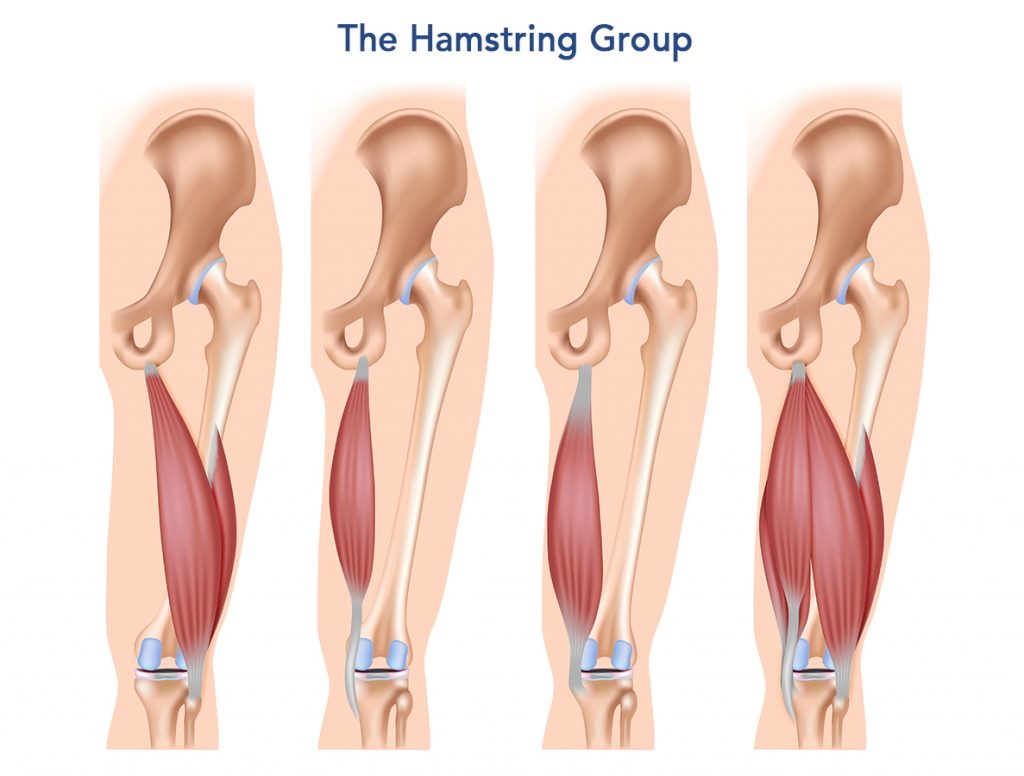
What is a hamstring strain?
Risk factors for hamstring strains
- Previous hamstring strain
- Poor leg muscle flexibility
- Hamstring weakness
- Poor core stability
- Lower back stiffness
- Fatigue
- Lack of training
What are the symptoms of a hamstring strain?
Grade 1
- Only a small amount of muscle fibres are torn
- Mild pain with hamstring contraction and stretching
- Minimal swelling and bruising
Grade 2
- Up to 50% of the muscle fibres are torn
- Moderate pain
- Restricted hamstring strength and flexibility
- Swelling and bruising
Grade 3
- More than 50% of the muscle fibres are torn, there may be a complete rupture
- Severe pain with hamstring contraction and stretch
- Swelling and bruising
- Often unable to weight-bear
How are hamstring strains treated?
Your physiotherapist will do a thorough assessment to determine the degree of injury to determine the appropriate treatment options and discuss the rehabilitation time frames.
Treatment may include:
- Advice to rest, ice, compress and elevate the affected leg
- Hands-on treatment once the bruising and swelling has reduced
- Exercises to improve hamstring muscle flexibility and strength
- Tailored exercises to address any risk factors, such as core stability and general leg strengthening exercises.
• Increased general strength and endurance
• Increased joint mobility and flexibility
• Management of arthritis
• Improved balance and coordination
• Improved bone density
• Improved cardiovascular fitness
• Improved sports performance
• Weight loss
• Manage hip and knee arthritis
• Reduce the need for surgery
• Improve strength and endurance
• Enjoy better physical health
• Reduce pain medication
• Improve quality of life
• Injury prevention
• Enhanced sports performance
• Increased mobility and flexibility
• Improved core and general strength
• Improved posture
• Antenatal care
• Improve core & pelvic floor strength
• Manage & prevent lower back pain
• Treat abdominal muscle separation
• Manage carpal tunnel syndrome
• Treat mastitis & blocked ducts
• Manage neck pain & stiffness


